DirektDemokrati.org

The people's chance to vote on all decisions made in the European Parliament

How it works

This is how it works

We publish all decisions and votes taken in the European Parliament on this website. Verified users get a chance to vote on the same decisions.

  • 1 The European Parliament publishes a proposal
  • 2 You read and vote on the proposals
  • 3 Compare the people's votes with Parliament's decision

Support the project

DirektDemokrati.org is run without ads or sponsors. Your donation helps us keep the site running and develop new features for a stronger democracy.

🌱

Every contribution makes a difference

Donate via PayPal
Current

Proposals

A proposal is a document from the European Parliament that contains suggestions for decisions based on legislative initiatives. These are the proposals that MEPs then vote on.

Finished proposals

Drones and new systems of warfare – the EU’s need to adapt to be fit for today’s security challenges
2026-01-22
See all finished →
For users

Voting on the website

We fetch all proposals and their related documents using the European Parliament's API, so users can read details about each proposal and vote.

How to vote:

  1. 1 Create an account with your email address
  2. 2 OPTIONAL Add a phone number to become verified, then your vote carries more weight.
  3. 3 Read about a proposal in Upcoming proposals, and vote on it

In the results section you can filter to only see verified users' votes if you want. In the future we plan to use stronger verification methods.

Anyone can read about proposals and see results - without creating an account.

Background

What is a proposal?

A proposal is a collection of suggestions that are brought before the European Parliament. Each proposal may include one or more items and can be based on legislative initiatives from the Commission or Parliament itself.

Each item is handled separately. Either all MEPs agree, or a vote is held. A proposal passes if more vote in favor than against.

Examples

How voting works in Parliament

Example 1

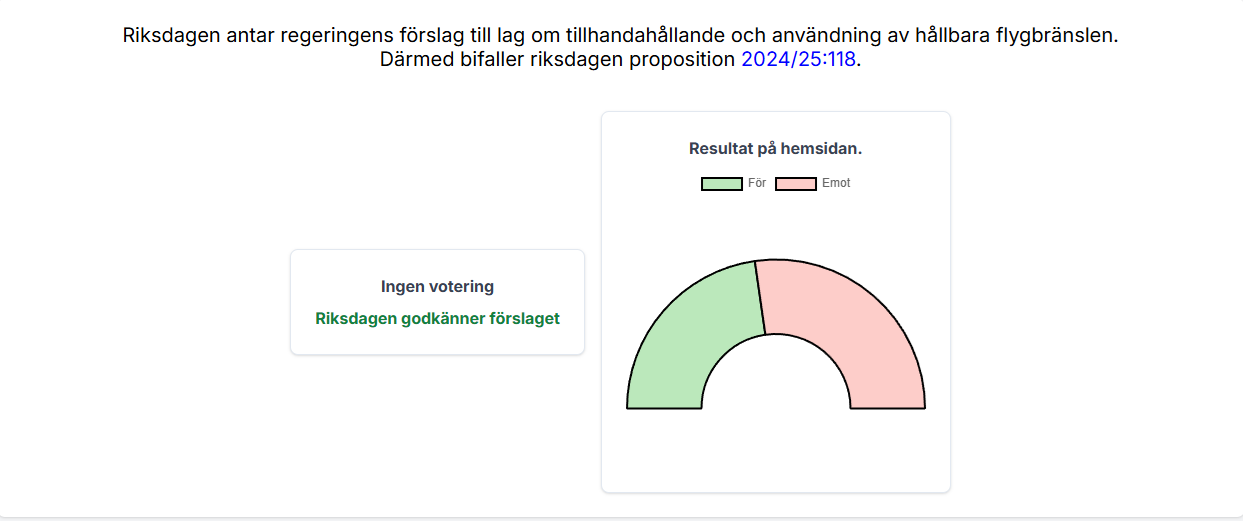
Rejection without a vote

In this example, Parliament rejects a motion without a vote - all present members were unanimous.

On the website, however, a small majority was against the proposal.

Example 1: Rejection without a vote
Note: The red-green chart shows what visitors thought.
Example 2

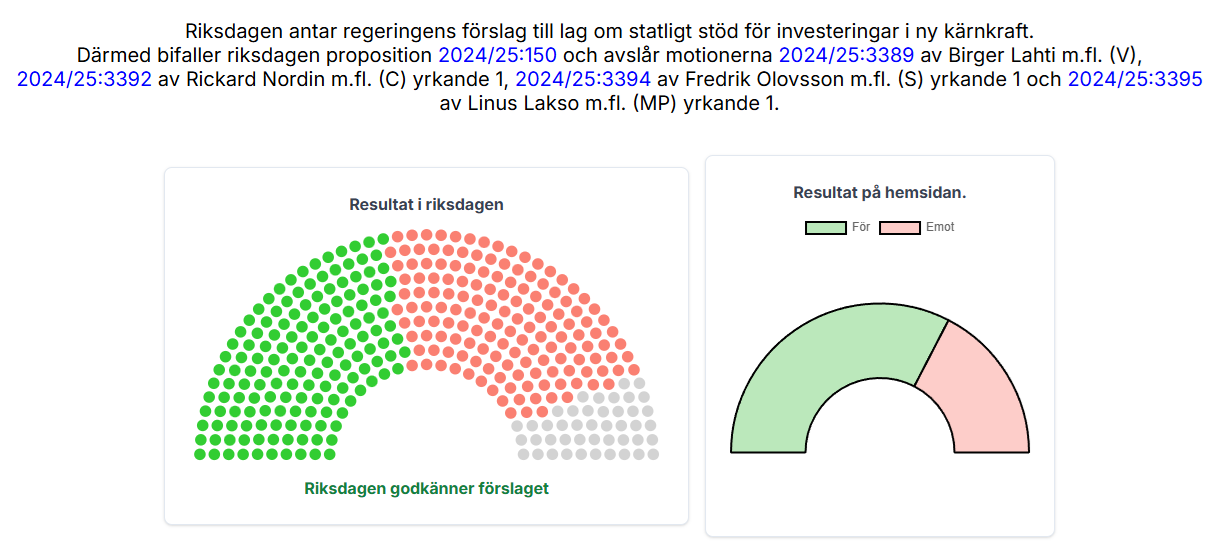
Decision after a vote

Parliament voted through a legislative proposal.

The proposal passed because a majority voted in favor.

Example 2: Decision after a vote
Close result: The visitors on the website also supported the proposal.
FAQ

Frequently Asked Questions

How do you handle my data?
We only store necessary data and never share user information. We do not store what you voted on – only that you have voted (to prevent double voting).

Optional demographic data (gender, age, region) is only used for anonymous statistics. Phone numbers for verification are stored encrypted.
Who is behind the website?
We are two people who created the website in our spare time. We are completely independent and have no political affiliation.
What is the purpose of the website?
The website has two purposes: to provide an overview of the European Parliament's work, and to highlight if decisions go against the will of the people.
I found a technical issue
Contact us at [email protected] and we'll fix it as soon as possible.
Can I see how different parties voted?
Yes! You can filter by party groups and see how individual MEPs voted by hovering over the chart.
Is there a Swedish Parliament version?
Yes! The Swedish Parliament version is available at direktdemokrati.org

Make your voice heard

Create an account and start voting on European Parliament decisions today.